Showing posts with label Reading. Show all posts

Wednesday, November 13, 2019

Reading Notes: Celtic Fairy Tales, Part B


Hi there guys!

Okay so the story I will be doing my notes over today is kinda a creepy one.... not like super creepy, but the picture they use really freaks me out. So I will insert it below ha ha.

(Creepy Dwarfs illustrated by John D. Batten)

So what on earth is this story about? Well it is about a woman who had twins that she cared for a nursed. Some strange things occurred in the town, but he mother always checked on her twins and they were always okay. Everyone in the town became suspicious though because the twins never grew. They stayed the same size for a very long time. So, the woman went to seek advice and was told to boil a hens egg, clean it out, fill it with porridge, take it outside, and listen to see if the twins were truly babies or not. When she did this she heard them talk as if the were adults. The wise man had told her if they did this to run inside and snack them and thrown them in the lake. She did this and goblins came and saved the dwarfs and returned the mother her real children. 

Yeah like super creepy....

Why would the dwarfs even want to be with the mother?
Where were the real twins at this time?
Why is this story so creepy?

Moving on from that, the language was actually pretty easy to follow and understand. The story was fairly short too. Overall, it was written very well. I like how there was actual factual history in the text. This included the location of the story. That is a great idea to include that and a hyperlink so the reader can do more exploring. 

To end these notes I just want to emphasis I will NOT be retelling this story. In the case that I were to retell it, I would answer some of my questions (see above) and make it less creepy. Maybe not have goblins haha.


Bibliography: 


Celtic Fairy Tales, Part B, Brewery of Eggshells by Joseph Jacobs. Retrieved from Mythology and Folklore UN-Textbooks

Tuesday, November 12, 2019

Reading Notes: Celtic Fairy Tales, Part A

Hey guys!

So this week I read a few of the Celtic Fairy Tales from the Celtic unit. They were pretty easy to read language wise and actually really enjoyable. I want to focus most of my attention on the story of Gold-Tree and Silver-Tree in these notes. I found this story to be the most captivating and most intriguing.

Just a quick summary:
There is a mother and daughter. One day the mother went to a well and a trout was swimming in it. She asked the trout if she was the most beautiful and the trout said no, her daughter was. The mother got angry and faked being deathly ill. She said the only cure was to eat her daughter's heart and liver. Her husband instead sent his daughter away with a prince and got his wife a goat heart and liver. The mother thought her daughter was dead until a year later when the trout informed her she was still not the most beautiful. She demanded to see her daughter and she traveled by boat to see her. The daughter locked herself in her prince's castle, but the mother demanded her to stick out her finger. The daughter did this and the mother poisoned her with a dart. The prince put the body of the daughter in a room locked away and got remarried. The new wife found the key to the room, unlocked it, and pulled the dart out of the daughter. The daughter woke up and everyone was happy. The mother was told by the trout a year later she was still not the most beautiful. This time the daughter poisoned her mother with the help of her prince's new wife. They all were happy after that.

Lets start with the main characters.....it is a mother and daughter who are named Silver-Tree(mother) and Gold-Tree(daughter). Why are they named this? Yeah I do not really know haha. I wish I did. I spend a bit of time researching and couldn't find anything about it. I can assume the silver represents less worth than the gold (which plays into the story later), but I have no idea about the tree part.

I did find out that trees are REALLY significant in Celtic mythology and lore. There are over twenty types of trees that all represent something. Overall, trees are spiritual beings that withhold magic. If I retold this story I would want to be more specific about the kind of tree. Here are some cool trees!

  • Willow Tree: Seeing and prophecy (to replace gold-tree because she always knows when her mother is coming to see her or hurt her???)
  • Ash Tree: Timeless and beautiful 
  • Heather Tree: Secretive 
  • Apple Tree: Young love, good wishes, and desire
  • Elder Tree: Moon magic and feminine powers
Last thing I want to talk about is why the trout? If I retell this story, I will make it a salmon. This is because in Celtic mythology the salmon is actually the fish of knowledge. Read more here! I have no idea what a trout is haha.  

That is all for these notes, but I am excited to retell this story!

(Addiction to Cheezburger cont. created with Cheezburger)


Bibliography: 
Celtic Fairy Tales, Part A, Gold-Tree and Silver-Tree by Joseph Jacobs. Retrieved from Mythology and Folklore UN-Textbooks

Thursday, November 7, 2019

Reading Notes: More English Fairy Tales, Part B

(Young Lassie on a Fish by John D. Batten)


Hey there!

When I was reading through the stories in part b of the More English Fairy Tales unit, I stumbled upon a story called The Stars in the Sky. If you have happened to visit my blog before, you may know that my project is called Star Stories for Children! So, obviously I was super interested in reading this story.

I was hopping to get some great new ideas, especially for the conclusion. This story really helped me imagine being a kid again and running around in my vivid dreams. So for the conclusion of my story I really want to speak to that. I still want to keep it as the reader is the traveler, but maybe set a tranquil mood where Vela can explain what happened and send the reader off into a dream.

As for the notes on this story, I want to focus them on the little details that may benefit my story, or I may practice retelling this story to get ready for the conclusion!


  • A girl wants to see the stars and goes on a wild goose chase to find them
  • She ask many people, but she never sees them
  • She is told to go on a horse and then on a fish
  • The fish drops her off at stairs, but she can't seem to get to the top where the stars are
  • She falls of and hits the water and cries
  • She wakes up in bed wailing all alone

Some ideas:
  • Make it a happy ending where she does find the stars! Maybe even Vila and link my story haha;)
  • Make it a young kid who climbs many things to visit the stars.
  • For my story I would love to have this same kinda story in the conclusion, but focus mores on the ending. Vela will drop the reader off in bed and the reader will wake up to the sun rising. 


Bibliography:
More English Fairy Tales, Part B, The Stars in the Sky by Joseph Jacobs. Retrieved from Mythology and Folklore UN-Textbooks

Wednesday, November 6, 2019

Reading Notes: More English Fairy Tales, Part A

Hey there!

So, I just read some of the English fairy tales and have picked one called Tattercoats to focus on. I selected this story because it is very similar to Cinderella. I wanted the opportunity to sit down with the story and really compare and contrast it. Also, I am currently addicted to Cheezburger so here is a picture I made.
(Pumpkin Pupper made with Cheeseburger)

Tell me that is not the cutest puppy ever. No there are no pumpkins in this story, but there are pumpkins in Cinderella. So, there is the first contrast ha ha!!!

Anyways, in Tattercoats there is a girl who's grandfather hates her. He hates her because during her birth her mother died and her mother was his favorite daughter. He is also rich, but he is a huge jerk. He refused to see his granddaughter. Over the years she is mistreated, hungry, and has no nice clothing. No one takes care of her except one servant.

That in itself is pretty different from Cinderella. There are no evil sisters or an evil step mom. Saddly  no talking and singing mice. I really was hopeful for a cute singing animal. Moving on though....after that set up, the rest isn't too far off. Tattercoats can't go to the ball that a prince is having to pick out his wife. She goes to a field and actually meets some guy who tells her to go to the ball with him (he was impressed by her flute). This guy is actually the prince. He tells the king this is his wife and she magically transforms and is then wearing a pretty dress. Happy ever after. 

So, if I were to change this, I would add significantly more cute and fluffy animals. Other than that, I love this story and want to keep it pretty similar!

Bibliography:
More English Fairy Tales, Part A, Tattercoats by Joseph Jacobs. Retrieved from Mythology and Folklore UN-Textbooks

Sunday, November 3, 2019

Extra Credit Reading Russia: Part B, The Fox-Physician

(Fox by Wikicommons)

Hi there guys!

So this story was very unexpected and quite jaw dropping to say the least. So get ready for a trickster fox and a dynamic plot.

Summary:
There was an old man and woman who planted cabbage. The old man's cabbage grew really tall...like to the sky. Actually, to the heavens. So, this old man climbs all the way up to the heavens and is super pumped. He comes back down and gets his old woman and throws her in a bag to take her up. They get halfway and he accidentally DROPS THE BAG. Aka....she dies. Oh but no fear because a fox physician is there to save the day. He tells the only man to give him oatmeal, butter, and her body. The fox demands that he should be left alone in a bathroom. The man waits outside while the fox "saves" the old woman. Well does he save her?.........Well......he eats her. Yeah. Plus this fox eats the oatmeal and butter. So, now the man is wifeless, foodless, and poor. The fox gets away.

What was my initial reaction?

(Screaming Hamster by Eurokek)

Was I surprised?
Okay to be honest I was expecting a trickster story because it includes a fox, but I was not expecting it to be that tragic. It was also kinda random in my opinion. Like why did they plant cabbages? Why did the old man not let his wife climb up herself? It is just a lot of whys. So, yes I was surprised by the ending and I wish it would have ended happier.

Would I retell?
Probably not. While yes it does contain a fluffy cute animal.....the animal eats someone and I just don't know if I vibe with that. If I did retell it I would be taking that part out. Maybe the fox would actually save the day. Who knows, but this story is not high on my retelling list.

Bibliography:
Russian Folktales: Russian Fairy Tales, Part B by W. R. S. Ralston. Retrieved from Mythology and Folklore UN-Textbook.

Wednesday, October 30, 2019

Reading Notes: Eskimo Folk-Tales, Part B

(Eskimo Family from World Atlas)

Hi guys!

So these notes will be about the Eskimo Folk-Tales, part B. Just as an overview of all of the stories, they are fairly violent. I was actually shocked at how many people died. There were many gruesome stories about killing women, men, and eating people. Compared to part A this was different, but even part A had some violence.

One story that really shocked me was The Wife Who Lied. Link Here

....um..... okay.... buckle up because this one is rough

So, a woman was raised by a tribe of people who eat other people, but she was taken away to be a wife at a young age. Like she left the people eaters, got a new mans, and a big happy family. I mean I would be grateful as heck at this point, but she was not. She wanted to go home.

Obviously, the only way to go home is to start a war. She put mittens on her feet and went back home so they believed she had not been taken care of. Her home tribe got really mad at her husband's tribe. So, when all the men left for hunting her home tribe went and killed all the women except three that hid. The home tribe stuck the dead women's bodies through long poles in the ground.

At this point I was shook.....like what even. How common was this? Anyways, the end is pretty simple and just as gruesome. The husband's tribe finds out that the wife lied and said she was being mistreated. They started a war and then killed the wife. Her death was pretty gruesome. If you are curious I suggest reading the story.

Moral of the story: DO NOT LIE

I will not be retelling this story. If I did, I would try to make it less violent for sure!


Bibliography:
Eskimo Folk-Tales, Part B by Knud Rasmussen. Retrieved from Mythology and Folklore UN-Textbook 

Monday, October 28, 2019

Reading Notes: Eskimo Folk-Tales, Part A


(Polar Bear from Creative Commons)

Hi guys!

Okay so today I read some stories from the Eskimo Folk-Tales Part A. Of course I loved the story about the cute polar bear. This should be no shock by now......

On a real note, this story is so cute. There isn't a huge underlying meaning other than to appreciate what you have before it is gone. Something I noticed with all of the stories in this unit is that they all had a pretty blunt ending. There wasn't always a good sum up or a overarching meaning. Most of these stories are just stories to be told not teach.

The Woman Who Had a Bear as a Foster Son. 

  • An old woman is given a bear cub (polar bear) from a bear hunter who gave her meat
  • The woman defrost the cub
  • The cub learns her language and she raises it
  • The cub plays with the kids, then the adults, and then just the men
  • When it is too big, the bear goes hunting with the men and help kill seals
  • One day it kills a random man to protect itself like the old woman told it to do
  • The old woman told the bear it had to leave her to protect itself from people coming to kill it
  • She waited until there was a day without a cloud in the sky to send the bear off. 
So this story reminded me of this movie I used to watch a kid at my family's house in Colorado. My favorite part is that the bear would sniffle when it was hungry. It was repeated throughout the story and added a heart warming touch to it. I would love to retell this story so here are some story ideas:
  • Tell the story from the Bear's point of view
  • Change the bear to a wolf and modernize it
  • Tell the story from a bear hunters point of view
  • Retell the story how it is
  • Retell it in a diary format over many years
    • Year/ Day 1: getting the cub
    • Year 2 entry: cub is playing too rough
    • Year 3 entry: cub's first day hunting
    • Year 4: cub attacks man 
    • Year 5: saying goodbye
Here are some sources 
Eskimo Folk-Tales, Part A: The Woman Who Had a Bear as a Foster Son by Knud Rasmussen. Retrieved from Mythology and Folklore UN-Textbook 

Extra Credit Reading Notes: Why Dogs Growl


(An Agressive Wolf Puppy by Creative Commons)

Hi there! 

So I highly suggest looking through the home page of UN-Textbook to find some awesome extra credit readings. The stories are all so great and so hard to choose between! So why did I pick Why Dogs Growl? Well I am getting a puppy in a few months and I would love to know exactly why it will growl;) Haha just kidding. I love stories on why things are the way they are. It will be a great story to share with my friends and family too (all dog lovers)!

Lets jump it!

First off, the word helpmeet is used a lot. I had no idea what this meant so I used trusty google to save the day. Helpmeet means a helpful companion. Typically a husband or wife. I believe it is supposed to actually refer to Eve though. Correct me if I am wrong. 

But back to the story, Adam was essentially surrounded by a bunch of animals with partners. God decided to give him a partner. So, God cut out a rib from Adam and set it on the ground. The dog at cat were growling and the dog snatched the rib. God took the rib back and cut off the dog's tail. The dog has been growling ever sense. 

So time for a little creativity. I would change a lot about this story. First off, you could make this story longer and more detailed. Here are some questions I have that need answers

  • Why do some dogs have tails now?
  • What was the first dog?
  • Why did God set the rib down?
  • Why did the cat not grab it?
  • Why cut the tail off the dog?
  • What happened to Eve?
There are too many questions that need answers. If I retold the story I think I would ditch most of it. Maybe keep the part about Adam. Overall, not a great story, but it could be fun to change it up!


Bibliography:
Why Dogs Growl from African American Folktales by Richard Dorson. Found on Mythology and Folklore UN-Textbook. 

Thursday, October 24, 2019

Reading Notes: Alaskan Legends, Part B

Hey there! 

So I am going to focus these notes on a specific story from Alaskan Legends, Part B. This story is called Tricks of the Fox. After reading all of the stories in part B (which I HIGHLY recommend because they are short, sweet, and super good) I found I enjoyed this one the most. All of the stories had a very historical mood about them. The were written in third person, but they were told as if they actually happened. It was like a direct retelling from someone who watched it. It is kinda difficult to explain, but if you read the stories it may make more sense. 

Anyways, I picked this story because it was a trickster story! It also had fox as the main character and if you know anything about me, you should know I am a sucker for stories about cute furry animals. Here is actually a link for 14 cool fox facts! One of the facts is that arctic foxes don't shiver until it is -94 degrees F! Also look how dang cute they are.

(Arctic Fox Pup by Wiki Commons)

They also change color with the season!


(Another Arctic Fox Pup by Wiki Commons)


Lets start with a brief run down and my thoughts while reading the story:

In the beginning there is a male fox with his pups. He leaves to go get Eagle eggs.

  • Pups are also called kits or cubs. Male foxes are also called tons. 
  • What kind of foxes is the story talking about? I think it is arctic foxes since the story is from the Koryak (Siberia). Here is a list of mammals in Alaska though. There are red foxes and arctic foxes. 
The first trick is done by the fox to get the eagle eggs down. Essentially he put grass stalks on his ears and pretended like he was going to knock the tree down where the eagle and her eggs were. He said he would knock it down if she did not throw an egg down. The eagle through an egg down to the fox. He then demanded another, she was frightened to lose all her eggs so she threw another. The fox laughed and insulted the eagle. The eagle picked him up and flew the fox to a deserted island. 

The second trick is done by the fox to get off the island. He sings a song to get the attention of the animals in the water. They ask what the song is about and the fox ask if they think there are more animals in the water or on land. They say the water. The fox ask them to prove it by making a bridge from the island to the land so he can count. They do as the fox says. The fox uses this bridge to escape this island and return home. 
  • I wonder what song he sang?
  • Why did the sea animals not eat the fox?
  • Do you think the fox learned his lesson to not ask of too much?


Bibliography:
Alaska Legends Part B edited by Katharine Berry Judson. Website: Mythology and Folklore UN-Textbook

Monday, October 21, 2019

Reading Notes: Alaska Legends, Part A


(Blue Jay by Wiki Commons)


Hey there!

So, to be completely honest my mind is going a million different directions, so trying to focus on this reading was extremely difficult.

Overall, this reading was about the Raven who created the world as we know it. It was very similar to the first part of the bible (genesis) in style and content. It is written in third person and moves quickly from one subject to the next. In the reading the Raven is the creator.  The Raven creates people, birds, tides, and everything in between.

My favorite part was The Naming of the Birds. I thought it was awesome. My favorite bird is probably either a blue-jay or a humming bird, so it was cool to read about a culture's idea of them and their purpose. If I do a story this week of this reading, I may want to just focus on the hummingbird or blue-jay. In case I do, here are the links I may find useful:


  • Humming Bird
    • "In legends, Hummingbird is often portrayed as a healer or as a spirit being who helps people in need, and sometimes plays the important mythological role of fire-bringer. Seeing a hummingbird is a sign of good luck in many Native American tribes, especially Northwest Coast tribes
  • Legend of the Humming Bird


I have visited Alaska pretty recently so I appreciated this reading a lot. I am hoping to be able to focus a little better on part B and take it in more.

Bibliography:
Alaska Legends Part A edited by Katharine Berry Judson. Website: Mythology and Folklore UN-Textbook

Wednesday, October 16, 2019

Extra Credit Reading Notes: How The Deer Got His Horns

Hello!

So I read How the Deer Got his Horns for some extra reading. After skimming the UN-Textbook I found this story to be my favorite!

First off it is so dang cute. I love stories about animals. I may even retell this story at some point! Regardless, the two main characters are a bunny and a deer.

Both the bunny and the deer are great at jumping and running very fast, so they decide to race. The prize is horns. The bunny ends up cheating by clearing a path. Due to this, the deer ends up winning by default.

Can you imagine if the bunny won? Think about what a bunny would look like with HORNS. That is crazy.

If I was tech savvy I would include a picture of a bunny with horns, but I am not. So please look at this picture of a bunny and imagine horns on it.

(Bunny with Invisible Horns: by Creative Commons)

What made this story so great in my opinion was its simplicity. It was not overcomplicated or cluttered with language or wordy sentences. It was easy to read and short. The message was clear: cheaters never win. Plus it was something any age could enjoy.

If I retold this story it may be fun to learn how to make a picture of a bunny with horns. I would have to really go through some tech tips though. Maybe watch a video on how to do it. I could change the story up to where the bunny would win. This story has endless possibilities! I hope I can retell this story. I guess we will find out next week!

Bibliography:
Myths of the Cherokee: How The Deer Got His Horns by James Mooney. Retrieved from Un-Textbook. 

Tuesday, October 15, 2019

Reading Notes: China Fox-Fire, Part B

Notes: China: Fox-Fire Part B


(Fox: by Wikicommons)


Characters:
  • Fox: The fox is the keeper of the elixir of life.
  • Farmer: The farmer is the one who steals the elixir of life from the fox. 
Elixir of Life:
  • What it does:
    • makes you invisible
    • you are able to interact with the spirit world
    • ability to see ghost and devils
    • call back the souls of those who are sick or dead
    • could plead for the forgiveness of sins
  • What I could add
    • gives you immortality
    • gives you super strength
    • gives you knowledge
    • allow you to go anywhere and do anything instantaneous
    • ability to talk with animals 
Questions I Have and Possible Answers:
  • Why did the fox not sneak up sooner and take the elixir?
    • He was testing the boy
    • He truly feared his strength 
  • How did the fox not age without the elixir?
    • since he was the keeper he does not age
    • he created another one that was less powerful
  • Could the fox not create a new elixir?
    • maybe there is only one that the fox was trusted with 
  • If the elixir could make the consumer invisible, why was the fox not invisible?
    • the fox did not want to be invisible because he wanted to test the boy
  • Why was the fox playing with the elixir?
    • help it grow more powerful
  • How did the fox originally get the elixir?
    • a gift from parents that has been passed down
    • a gift from the spirits
  • What is the mans life now like without the elixir?
    • he ages quickly and is poor

Overall, I was captivated by the story. If I were to retell the story I would just add to it. If I wanted to set up the story, I would focus on how the fox came across the elixir. Maybe it could be some battle or something grand such as that. 

Bibliography: 

Chinese Fairy Tales Part B by Donald Mackenzie. Website: Mythology and Folklore UN-Textbook

Reading Notes: China, Part A

Notes: China Part A


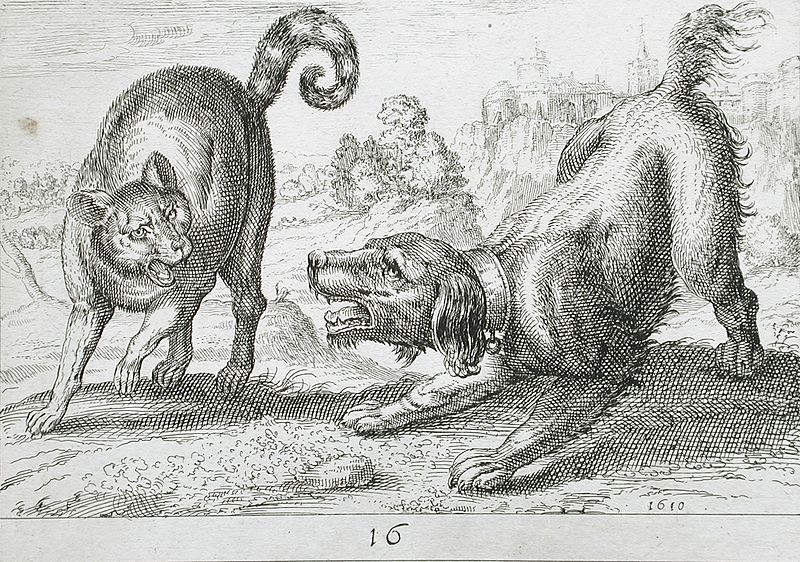
(The Dog and Cat: Hendrik Hondius)

Here are a few of my favorite stores from all of the readings:

The Cave of Beast:

  • Why was it important that the daughters did not tell each other?
  • Did the father know the mom gave them the eggs?
  • Did the mom not go try to find her daughters?
  • Why duck eggs? 
  • Did the wolf and fox die?
  • Why are the wolf and fox friends?

Why the Dog and Cat are Enemies:

  • Interesting story, but slightly confusing
  • What happened to the rat?
  • Who had the ring?
  • Why did the cat not tell them about the dog, how would it?
The Silk Worm Goddess
  • Woman was in depth to horse. Father kills horse. Horse hide wraps up woman and she becomes a silk worm. 
  • Silk worms are cultivated in Spring and the stallion is the zodiac of the Spring. 
  • How was the horse able to live?
  • Why did the father not let the horse marry his daughter?
  • Why did the father leave his daughter?
Overall, I was not as captivated by the stories as I thought I would be. Many of them did not make any sense to me what so ever. Especially on the why. Why certain things occurred versus not confused me quite a bit. If I were to retell these stories I would definitely focus on the questions I have listed above. I may even write a story the occurs before one of the readings. This may aid in the explanation. 

My favorite story was why the Dog and Cat are enemies, but it still left me confused. If I were to retell the story I would just add to it. If I wanted to set up the story, I would focus on where the ring went. Maybe even explaining the first time the daily got the ring. 

Bibliography: 

Chinese Fairy Tales Part A by Donald Mackenzie. Website: Mythology and Folklore UN-Textbook

Wednesday, October 2, 2019

Reading Notes: Nigerian Folk Stories, Part B

Notes: Nigerian Folk Stories B


(Lightning by Creative Commons)


Focus on The Lightning and the Thunder


Characters:

Lightning: Thunder's child. In this story, the lightning is a ram. He has a very bad temper and when he is angry he destroys things, burns things, and even kills people. I would challenge finding a way to make this character do good or develop into good.

Thunder: Lightning's mom. In this story, thunder is represented by a mother sheep. She tries her hardest to protect others by telling her child no. She would use a very loud voice.

King: The king attempted to keep peace in the town by putting them far on the edge of town. When that failed, he put them in the sky.


Changes I would like to make/ideas:

Adding Rain
  • There are three main characters: Lightning, Thunder, and Rain. 
  • Rain is very emotional and gets scared of Lightning?
OR

Story set when Lightning was just a baby. Possibly change the animals.
  • Would be told from the King's perspective
    • Why things were burning down?
    • Interviewing several people in hopes to find an answer?
    • Questioning characters like snow, rain, and cloud.
  • Finally figure out it was Lightning and warning Thunder about him
  • Lighting and Thunder could be birds instead of a sheep and a ram

Point of View:
  • A letter from Thunder to her mom (cloud?) for advice 
  • Point of view of the King
  • Why Lightnings gets so upset (in the mind of Lightning)
  • Detective interview
General notes:

Start of story was a once upon a time type. It was "IN the olden days,..."

Middle is slightly repetitive, but gives a brief run down of why thunder and lightning are in the sky.

The ending of the story is an explanation of why thunder and lightning are the way they are today. 


Bibliography: 

Nigerian Folk Stories Part B by Elphinstone Dayrell . Website: Mythology and Folklore UN-Textbook

Tuesday, October 1, 2019

Reading Notes: Nigerian Folk Stories, Part A

Notes: Nigerian Folk Stories A


(The Sun, Moon, and Water by Creative Commons)

Focus on the Why the Sun and the Moon Live in the Sky


Characters:

Sun: I would want to keep the Sun as a character. The Sun in this story is friendly, married to the Moon, and friends with Water. 

Moon: I think the Moon is great in this story, but I wish there was more about the Moon other than being the Sun's wife. Maybe if I rewrite this story I can give the Moon a bigger role in the story. That could be as the narrator or just as a bigger player in the story.

Water: Water in this story is best friends with the Sun and wants to be able to go to the Sun's house. Water and its family is too large and drives the Sun and the Moon away into the sky. 


Changes I would like to make:

  • The Water loved the Moon and when it had the chance it tried to drive out the Sun from Earth and flooded it. 
  • The Sun and Moon go away as it fills the Earth. 
  • The Sun and Moon watch over the Earth now to make sure that Water does not flood it again out of spite. 
  • That is why the Sun and Moon watch the Earth at different times during the day. 
  • Could be why tides go with the Moon, because the Water misses the Moon?
OR
  • The Water is the Moon's brother and out of spite of her marriage it flooded the Earth. 
  • The Moon and Sun must escape to the sky
  • Now the Moon and Sun watch over the Water. The Sun because he lacks trust, and the Moon because she misses her brother. 
  • This could explain tides.

Point of View:

I like the point of view in third person, but it may be fun to play around with it. I could write it from the point of view of the Moon. 

Bibliography: 

Nigerian Folk Stories Part A by Elphinstone Dayrell . Website: Mythology and Folklore UN-Textbook

Wednesday, September 25, 2019

Reading Notes: The Life of Buddha, Part B

Notes: Life of Buddha Part B

(Maya by Wikipedia)

Names:

KEY NAMES ARE HIGHLIGHTED

Mahaprajapati
Siddhartha
Gopa
  • means cow herder 
  • wife of Siddhartha
Chandaka
  • means Charioteer of Buddha
Kanthaka:
  • white horse of Siddhartha
Arata Kalama 
  • teacher of the the doctrine of renunciation
  • does not teach Siddhartha
Sakra
  • means from India
  • Some kind of god "He is like a God, like Sakra or Brahma himself."
Brahma
  • The Hindu god Brahma is the creator and director of the universe
  • Means "growth, expansion, creation"
  • depicted with four heads and four arms 
Vimbasara
  • King of Rajagriha
Rudraka
  • famous hermit, son of Rama
  • Rudraka's disciples: Kaundinya, Asvajit, Vashpa, Mahanaman and Bhadrika
Maya
  • Siddhartha's mother
  • Has several meanings in different culture, but generally means good, feminine, and a mother of power, click here for more info
Asita
  • means “Tranquil; dark, blue; warm, hot”.
  • was a hermit who predicted Siddhartha's good and successes 
Svastika
  • the reaper
Mara
  • the Evil One
  • means bitter and strength

(Rajagriha by Wikipedia)


Cities mentioned:

Kapilavastu: where King Siddhartha and Maya lived
Magadhi
Rajagriha
Nairanjana


Unknown words: 

  • beatitude: supreme blessedness
  • dejection: sad and depressed state
  • espied: to have caught sight of
  • obdurate: stubbornly refuse to change opinion, hard headed
  • donned: to have put on
  • equerry: an officer
  • abstemious: not self indulgent (especially with food and drink) 
  • hermitage: dwelling of a hermit 


Bibliography: 

The Life of Buddha: Part B by 
Andre Ferdinand Herold. Website: Mythology and Folklore UN-Textbook